Phase 1 Peptides
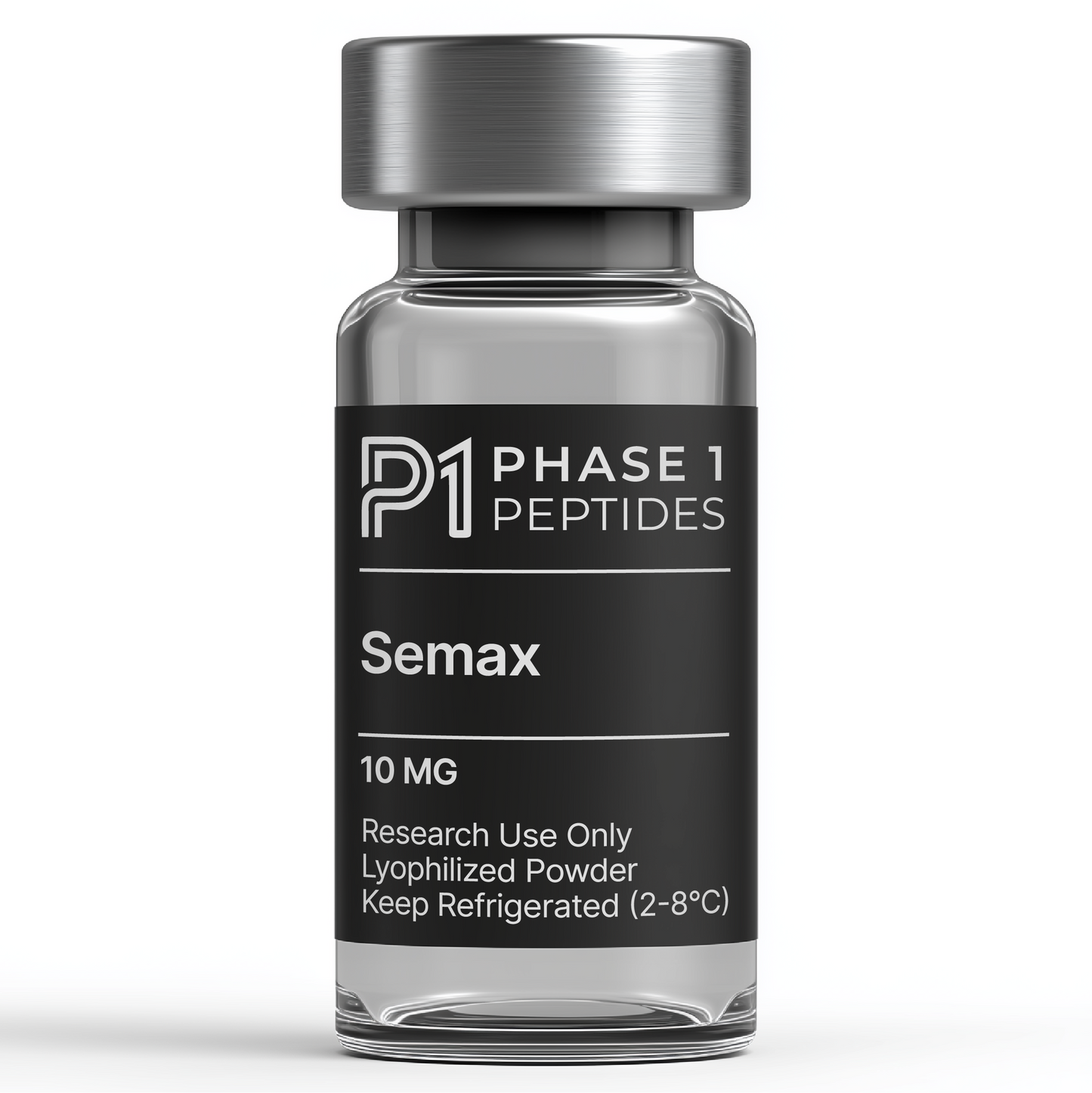
Semax
Semax
Couldn't load pickup availability
Semax Overview
Semax is a heptapeptide analogue of the ACTH(4-10) fragment with the sequence Met-Glu-His-Phe-Pro-Gly-Pro. In research settings, it is studied in neurobiology and peptide-signaling models involving central nervous system regulation, neurotrophin-associated activity, and stress-response pathway biology.
Mechanism of Action & Applications
Semax is studied for how it influences neurotrophin-related signaling and broader peptide-regulated nervous system activity. Published research and reagent references describe it as affecting BDNF and TrkB expression and activity in experimental systems, while other literature has explored possible interactions with melanocortin receptors and peptide-degrading enzymes. In laboratory research, this makes it useful for examining neurotrophic signaling, neuroendocrine pathway activity, stress-response biology, and peptide-mediated cellular regulation.
Research History
Semax first appeared in the scientific literature in the early 1990s as a modified ACTH fragment developed for central nervous system research. Later studies expanded into gene-expression, neurotrophin, and peptide-signaling models, helping establish Semax as a commonly referenced compound in neurobiology-focused research.
Chemical Information
CAS Number: 80714-61-0
Molecular Formula: C₃₇H₅₁N₉O₁₀S
Molecular Weight: 813.92 g/mol
PubChem ID: 122178
Purity: ≥99%
Share