Phase 1 Peptides
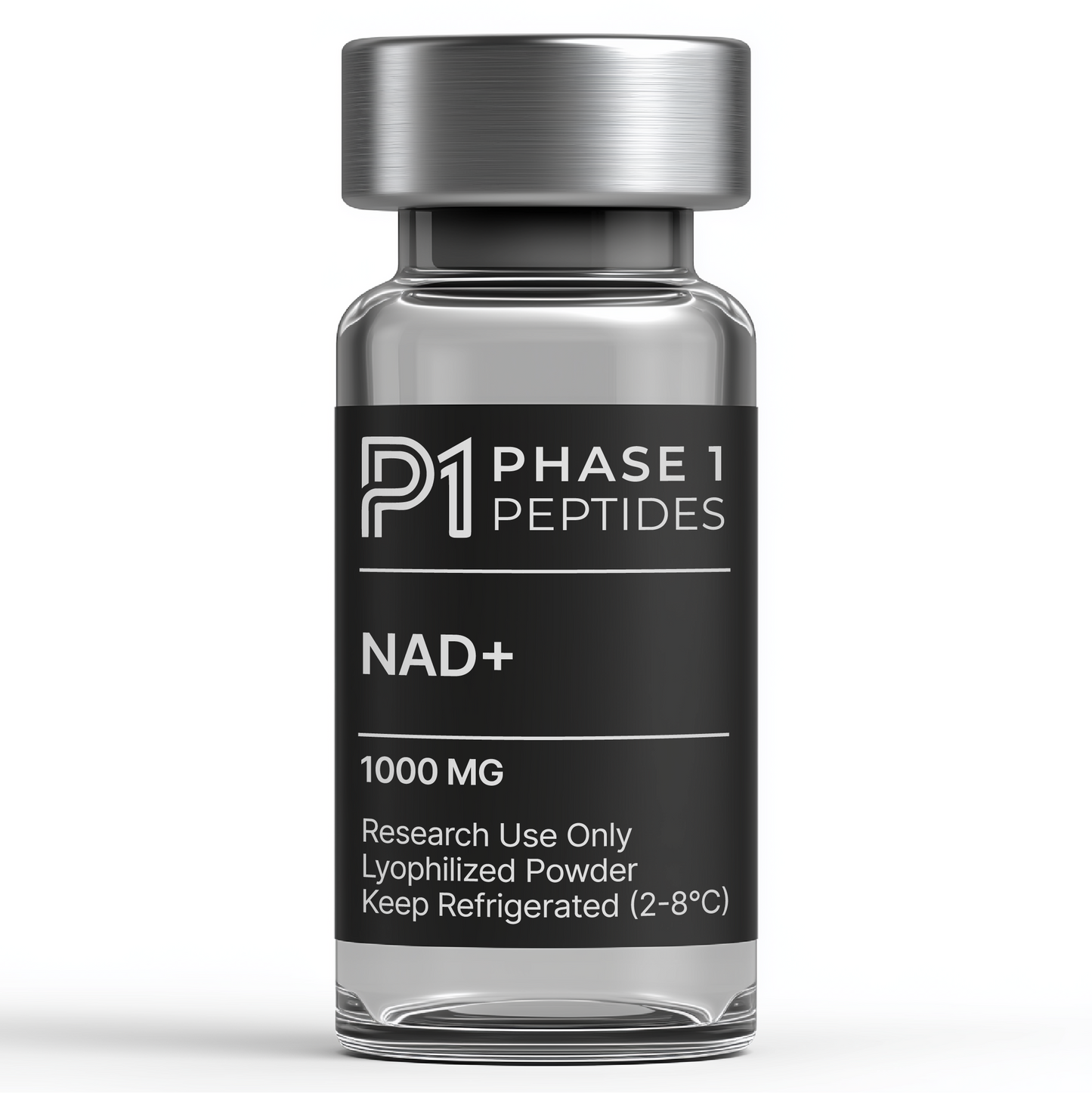
NAD+
NAD+
Couldn't load pickup availability
NAD+ Overview
NAD+, or nicotinamide adenine dinucleotide, is a coenzyme found in all living cells and is central to many metabolic processes. In research settings, it is studied for its role in energy production, electron transfer, and broader cellular systems involved in mitochondrial activity, redox regulation, and stress-response biology.
Mechanism of Action & Applications
NAD+ is studied for how it functions as an electron carrier in oxidation-reduction reactions and as a substrate for enzymes such as sirtuins, PARPs, and CD38. In laboratory research, this makes it useful for examining mitochondrial energy metabolism, DNA repair-related signaling, cellular aging pathways, oxidative stress responses, and broader metabolic regulation. It is commonly used in studies involving neurobiology, longevity-related signaling, and cellular resilience models.
Research History
NAD+ has been studied for more than a century and remains one of the most important molecules in biochemical research. Early work established its role in redox chemistry and cellular metabolism, while later studies expanded into its involvement in mitochondrial biology, enzyme regulation, and age-related cellular signaling pathways.
Chemical Information
CAS Number: 53-84-9
Molecular Formula: C₂₁H₂₇N₇O₁₄P₂
Molecular Weight: 663.43 g/mol
PubChem ID: 5892
Purity: ≥99%
Share