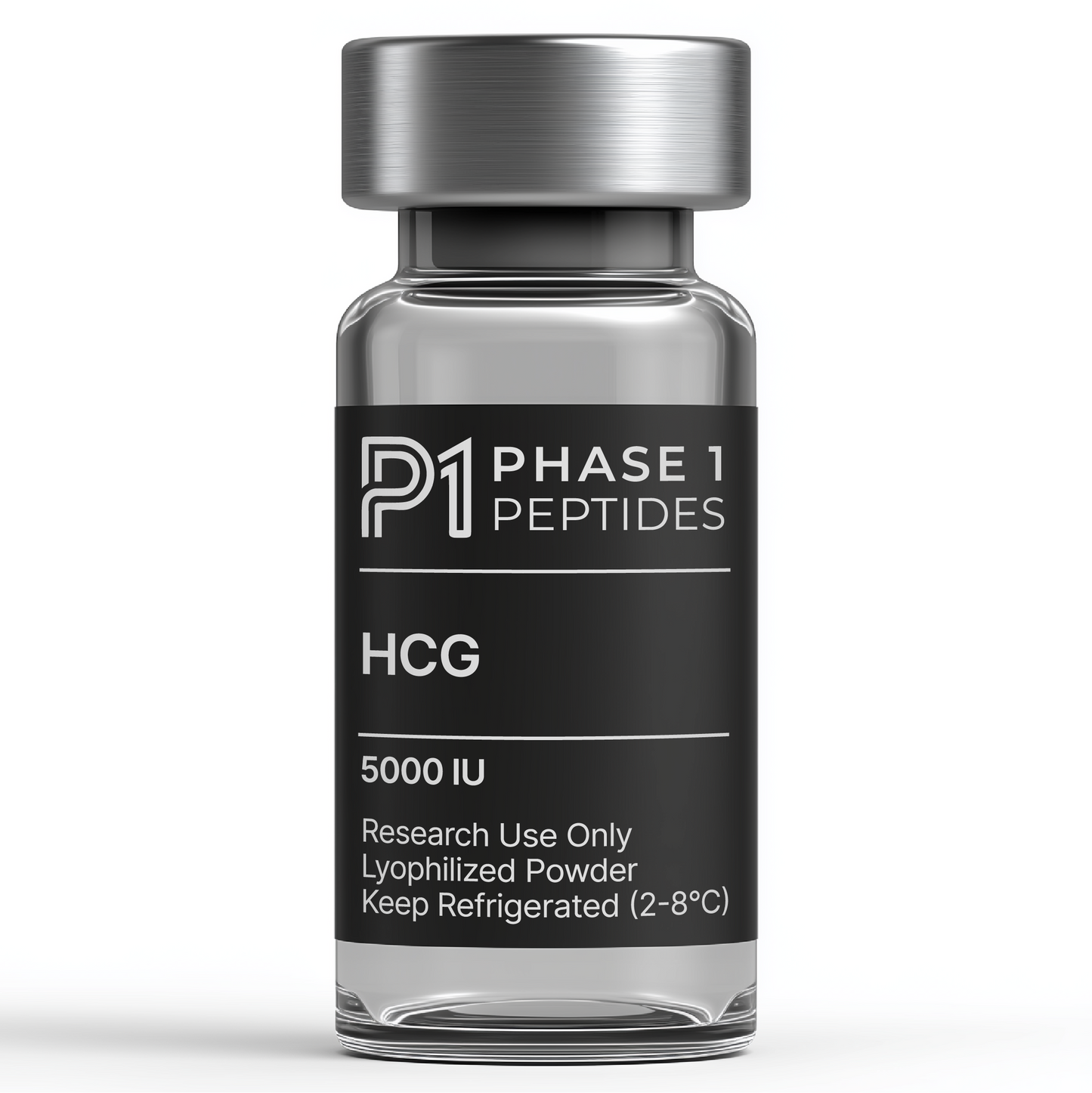
Phase 1 Peptides
HCG
HCG
Couldn't load pickup availability
HCG Overview
HCG, or human chorionic gonadotropin, is a naturally occurring glycoprotein hormone composed of alpha and beta subunits. In research settings, it is studied for its role in receptor-mediated endocrine signaling, particularly in models involving gonadotropin biology, steroidogenic pathway activity, and reproductive hormone regulation.
Mechanism of Action & Applications
HCG is studied for its activity at the luteinizing hormone/choriogonadotropin receptor (LHCGR). In laboratory research, this makes it useful for examining receptor activation, cyclic AMP signaling, gonadal steroidogenesis, and broader endocrine pathway coordination. It is commonly used in studies involving reproductive endocrinology, gonadotropin receptor biology, ovarian and testicular signaling models, and hormone-response pathway research.
Research History
HCG has been studied for decades as one of the key hormones involved in reproductive endocrinology. Early research focused on its identification in pregnancy-related biology, followed by broader investigation into its receptor activity, structural subunits, and role as a model ligand in gonadotropin signaling research.
Chemical Information
CAS Number: 9002-61-3
Molecular Formula: Not publicly standardized
Molecular Weight: Approximately 36.7 kDa
PubChem ID: Not publicly standardized
Purity: ≥99%
Share