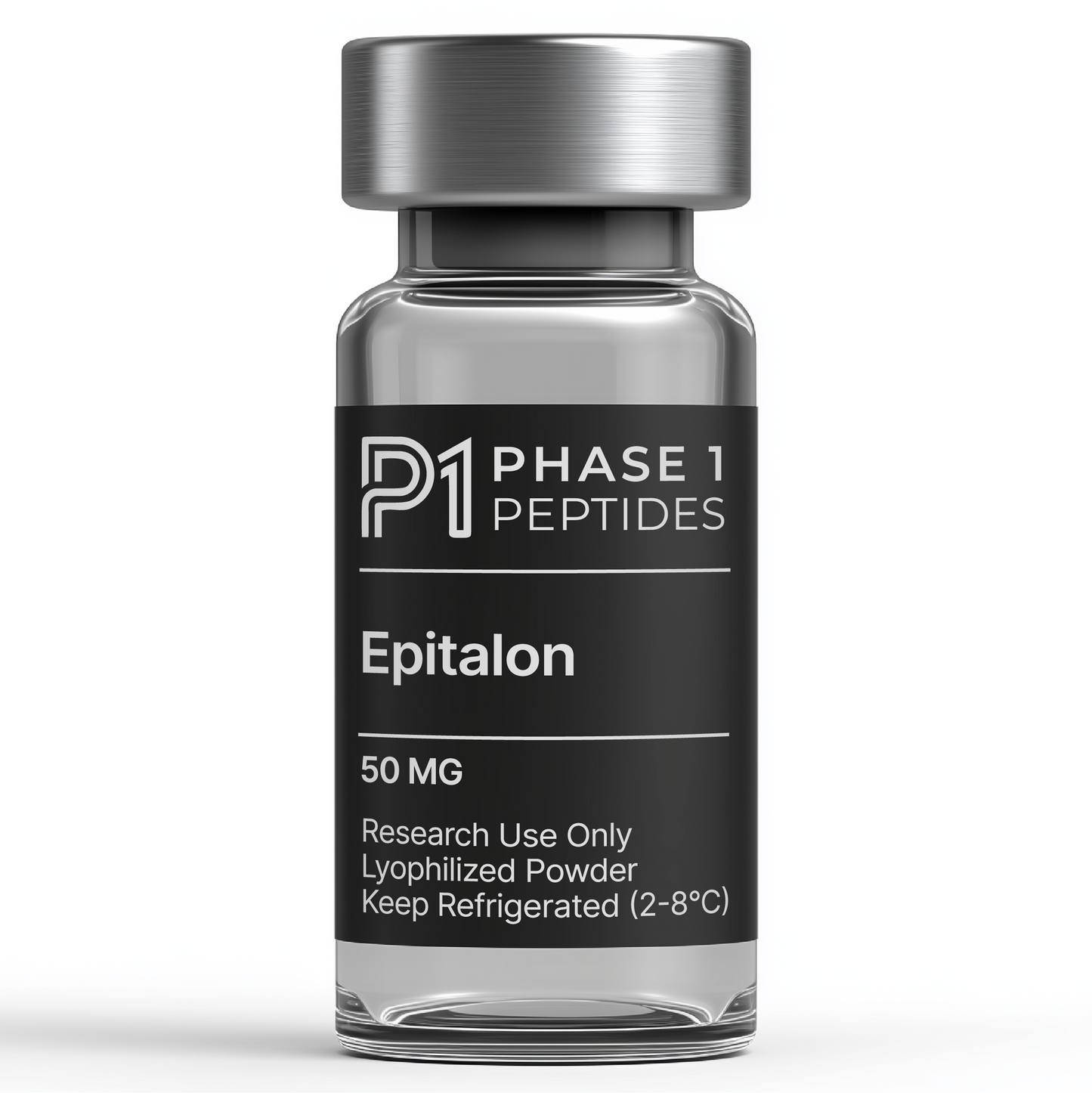
Phase 1 Peptides
Epitalon
Epitalon
Couldn't load pickup availability
Epitalon Overview
Epitalon, also referred to as Epithalon, is a synthetic tetrapeptide derived from the naturally occurring peptide complex epithalamin. In research settings, it is studied for its relationship to cellular regulation, telomerase-associated activity, and age-related biological pathways, particularly in models focused on how short peptides influence cellular maintenance and signaling.
Mechanism of Action & Applications
Epitalon is studied for its influence on telomerase-related processes and broader cellular regulatory systems involved in replication, stress response, and gene expression. In laboratory research, this makes it useful for examining telomere-associated biology, cellular senescence models, oxidative stress pathways, and peptide-mediated regulatory activity linked to long-term cell function and stability.
Research History
Epitalon emerged from earlier work involving epithalamin, a pineal-derived peptide preparation studied in aging and neuroendocrine research. Later investigations isolated shorter peptide fragments such as Epitalon to examine whether specific peptide sequences could reproduce aspects of the broader regulatory activity observed in earlier experimental models.
Chemical Information
CAS Number: 307297-39-8
Molecular Formula: C₁₄H₂₂N₄O₉
Molecular Weight: 390.35 g/mol
PubChem ID: 219008
Purity: ≥99%
Share