Phase 1 Peptides
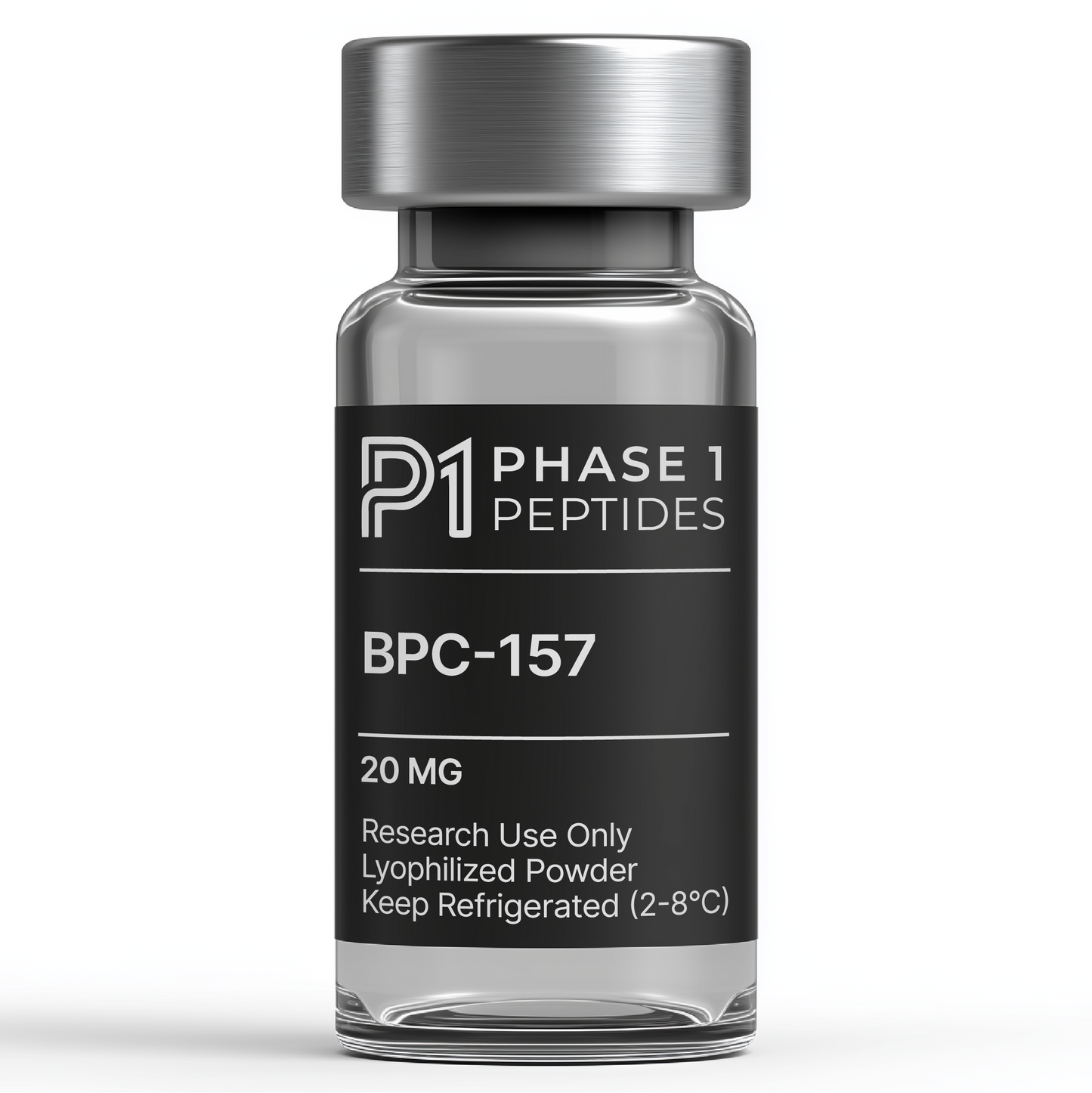
BPC-157
BPC-157
Couldn't load pickup availability
BPC-157 Overview
BPC-157 is a pentadecapeptide originally identified as a gastric protein fragment and later developed as a standalone research peptide. In laboratory settings, it is studied for its activity across cellular signaling systems involved in vascular biology, extracellular matrix dynamics, and tissue-related pathway regulation.
Mechanism of Action & Applications
BPC-157 is studied for its interaction with angiogenic signaling, nitric oxide-related pathways, and growth factor-mediated cellular responses. In research models, this makes it useful for examining how vascular signaling, collagen-associated processes, and inflammatory pathway activity interact within structural and cellular systems. It is commonly used in studies involving connective tissue biology, gastrointestinal pathway research, vascular signaling, and broader cellular response models.
Research History
Research on BPC-157 began with investigations into protective protein fragments derived from gastric tissue. Over time, this work expanded into experimental models involving tendon, ligament, vascular, and gastrointestinal systems, where BPC-157 became a widely referenced peptide in preclinical pathway research.
Chemical Information
CAS Number: 137525-51-0
Molecular Formula: C₆₂H₉₈N₁₆O₂₂
Molecular Weight: 1419.56 g/mol
PubChem ID: 108101
Purity: ≥99%
Share